
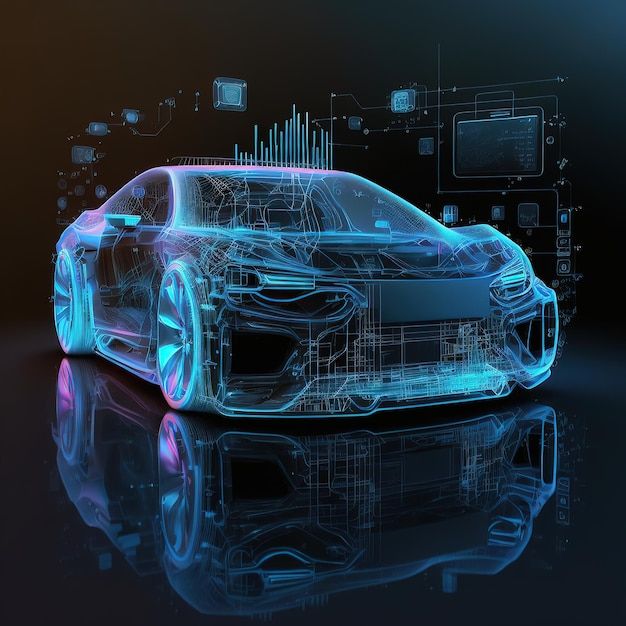
Self-driving cars, also known as autonomous vehicles (AVs), are no longer a distant vision of science fiction. In the United States, they are rapidly becoming a realistic part of the transportation system. Major American technology companies and automakers such as Tesla, Waymo, General Motors, and Ford are investing billions of dollars into autonomous driving technology. As innovation accelerates, self-driving cars have the potential to reshape the American economy, urban planning, and everyday life.
One of the main reasons the United States is leading the development of self-driving cars is its strong technology sector. Silicon Valley has become a global hub for artificial intelligence, machine learning, and software engineering—key components of autonomous driving systems. Companies like Waymo, a subsidiary of Alphabet, are already operating self-driving taxi services in cities such as Phoenix and San Francisco. These pilot programs show how autonomous vehicles could reduce human error, which is responsible for over 90% of traffic accidents in the U.S.
Safety is one of the strongest arguments in favor of self-driving cars. Every year, tens of thousands of Americans lose their lives in car accidents caused by distraction, fatigue, or impaired driving. Autonomous vehicles do not get tired or distracted, and they can react faster than humans in emergency situations. If implemented correctly, self-driving technology could significantly reduce traffic fatalities and injuries, saving lives and lowering healthcare costs across the country.
Another important benefit is increased mobility. In the United States, many people—such as seniors, people with disabilities, and those without driver’s licenses—face transportation barriers. Self-driving cars could provide these groups with greater independence and access to jobs, healthcare, and social activities. In suburban and rural areas, where public transportation is often limited, autonomous vehicles could play a crucial role in improving mobility.
From an economic perspective, self-driving cars could transform several American industries. The trucking and delivery sectors, which are essential to the U.S. economy, may see major changes. Autonomous trucks could operate longer hours, reduce fuel consumption, and lower shipping costs. At the same time, this raises concerns about job displacement for millions of professional drivers. As a result, workforce retraining and new employment opportunities in technology, maintenance, and fleet management will be essential.
Despite the potential benefits, the future of self-driving cars in the U.S. also faces significant challenges. One of the biggest obstacles is regulation. Traffic laws in the United States vary by state, creating a complex legal environment for autonomous vehicles. While states like California, Arizona, and Texas have embraced testing and deployment, others remain cautious. The federal government is still working on nationwide standards for safety, liability, and data protection.
Public trust is another critical factor. Many Americans remain skeptical about riding in a fully autonomous vehicle, especially after highly publicized accidents involving self-driving systems. Building confidence will require transparency, consistent safety performance, and clear communication from both companies and regulators. Human oversight may remain necessary during the transition period, with semi-autonomous systems becoming more common before full autonomy is widely accepted.
Environmental impact is also part of the discussion. While self-driving cars themselves do not automatically reduce emissions, they could support a cleaner transportation system when combined with electric vehicles. In the U.S., where car ownership is high, autonomous electric fleets could reduce congestion, optimize traffic flow, and lower greenhouse gas emissions. However, if self-driving cars lead to increased travel demand, the environmental benefits may be limited.
Looking ahead, the future of self-driving cars in the United States will likely be gradual rather than revolutionary. Instead of a sudden shift to fully autonomous vehicles, Americans will experience increasing levels of automation through advanced driver-assistance systems. Over time, as technology improves and regulations evolve, self-driving cars may become a normal part of daily life—especially in urban areas and commercial transportation.
Questions
1. Factual question: What are two major benefits of self-driving cars mentioned in the article?
2. Opinion question: Do you think self-driving cars will make American roads safer? Why or why not?
3. Discussion / critical thinking question: How might self-driving cars change the job market in the United States, and how should society respond to these changes?
Conclusion
Self-driving cars have the potential to significantly transform transportation in the United States. While challenges related to regulation, safety, and public trust remain, the benefits in terms of safety, mobility, and economic efficiency are substantial. As American technology companies continue to innovate and policymakers adapt to new realities, autonomous vehicles are likely to play an increasingly important role in shaping the future of transportation across the nation.