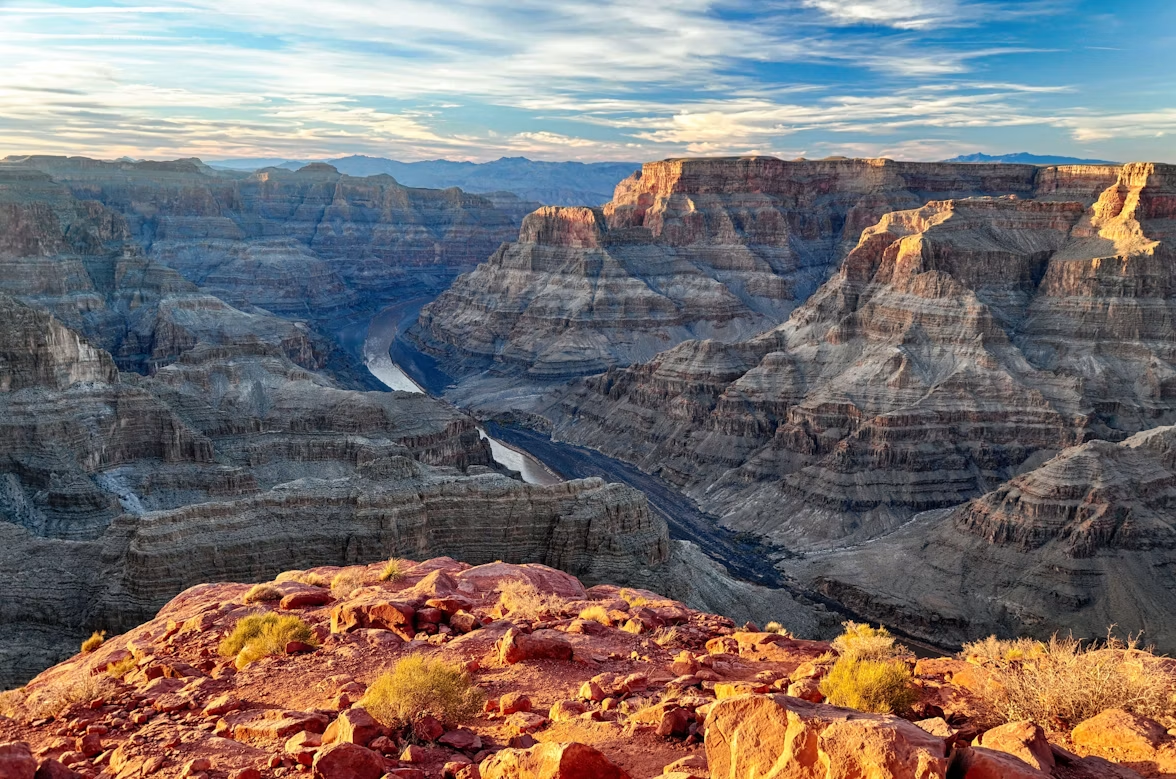
The first time you walk up to the rim of the Grand Canyon, something strange happens: your brain refuses to process it. You've seen the photos. You know, intellectually, that it's big. But nothing prepares you for the moment the ground simply drops away and keeps dropping, layer after layer of rust-red and amber rock stacked a mile deep, stretching out until the far wall dissolves into haze eighteen miles away. Ravens ride the thermals below your feet — below your feet — like they're nothing at all. Somewhere down in that vastness, the Colorado River is carving away at stone that started forming before there were bones on this planet. You'll find yourself laughing, or going quiet, or reaching for someone's hand without quite meaning to. This is what a national park can do to a person, and it's exactly why so many first-timers fall in love with the American Southwest.
Why Go Guided (Especially If You're New to This)
Here's the thing nobody tells you before your first national park trip: these places are enormous, the driving distances are no joke, and a lot of the best moments — the sunrise light, the ranger who knows exactly where the condors nest, the trail that isn't on the map you printed at home — are only accessible if you know where and when to be. That's where guided tours earn their keep.
A good helicopter pilot, hiking guide, or shuttle service does more than move you from point A to point B. They read the weather, time your arrival to avoid the worst of the crowds, know which overlook nobody else bothers with, and hand you back hours of your trip that would otherwise vanish into parking lots and trailhead confusion. If you don't have a car, or you'd rather not navigate hairpin canyon roads on unfamiliar rental tires, a tour solves that problem entirely. And if this is your first time seeing landscape on this scale, having someone narrate what you're looking at — the geology, the history, the sheer number of years stacked in those rock layers — turns a pretty view into something you actually understand and remember.
Most of these experiences fill up fast, especially in peak season, so booking ahead through a platform like GetYourGuide is less about convenience and more about making sure you actually get the slot you want.
1. Helicopter Tour Over the Grand Canyon
There's a version of the Grand Canyon you simply cannot get from the rim, and that's the one you see from the air. The moment the helicopter lifts off and the desert floor tilts away beneath you, the canyon stops being a single view and becomes an entire world — side canyons branching like veins, buttes rising up as isolated islands of rock, the river a thin green-brown ribbon impossibly far below. Many flights swoop down below the rim line itself, dropping you into the canyon's interior so you're flying past rock walls rather than just looking down at them.
This is the experience for travelers short on time, anyone with limited mobility who still wants the full scale of the place, or simply people who want the one memory that no ground tour can replicate. Some routes extend out over Lake Mead or into Zion's red rock country, turning a 30-minute flight into a full regional overview. Seats are limited and weather-dependent, so this is a tour worth locking in through GetYourGuide well before your trip dates, particularly if you're traveling in summer.
2. Guided Sunrise Hike at the Rim
Set an alarm you'll regret and thank yourself for later. There's a particular hush at the Grand Canyon before dawn — no engines, no chatter, just wind moving through piñon pines and the occasional call of a canyon wren. Then the sun clears the horizon and the whole canyon seems to ignite in stages, the deepest layers still in shadow while the upper rims catch fire in orange and pink. It's a slow, layered kind of light show, and it changes by the minute.
A guided sunrise hike gets you to the right overlook before the tour buses arrive, and a knowledgeable guide will walk you along a section of rim trail explaining what you're actually looking at: the Vishnu Schist at the bottom, nearly two billion years old, and the younger Kaibab limestone at the top. This is best for early risers, photographers chasing that golden light, and anyone who wants a quieter, more contemplative introduction to the canyon before the day gets busy. Sunrise slots are genuinely limited to keep groups small, so reserve this one through GetYourGuide as soon as your travel dates are set.
3. Yellowstone Day Trip: Geysers, Wildlife, and Wide-Open Wilderness
If the Grand Canyon is about scale, Yellowstone is about surprise. One minute you're driving through a lodgepole pine forest, the next you round a bend and the earth itself seems to be breathing — steam rising from hillsides, mudpots bubbling like something alive, and then Old Faithful sending a column of water skyward right on schedule, to the sound of a hundred people gasping in unison. Add in the very real chance of spotting bison ambling across the road, elk grazing in open meadows, or a distant wolf pack moving through the Lamar Valley, and you start to understand why people return to Yellowstone year after year.
A guided day trip is genuinely the smart move here, because the park is spread over roughly 3,500 square miles and the good wildlife-viewing spots change by season and time of day. Guides know where the animals have been active recently and how to time the geyser basins to avoid the thickest crowds. This suits travelers who want a highlights-reel introduction without spending days figuring out logistics themselves, plus anyone hoping to actually see wildlife rather than just empty meadows. Given the driving distances involved, these tours book up early through GetYourGuide, especially in July and August.
4. Zion National Park: Shuttle System + Guided Canyon Hike
Zion does something almost disorienting after the openness of the Grand Canyon and Yellowstone: it closes in around you. Walking through the Narrows or along the base of the Zion Canyon shuttle route, you're hemmed in by sandstone walls rising a thousand feet straight up on either side, striped in shades of cream, rose, and deep red where desert varnish has stained the rock over centuries. Cottonwood trees line the Virgin River at the canyon floor, and depending on the season, their leaves can turn the whole valley gold.
Private vehicles aren't allowed on the main canyon road for most of the year, so the shuttle is how everyone gets around — and pairing that shuttle system with a guided hike is the easiest way to see the park's best trails without wasting a morning figuring out permits and logistics on your own. A guide can steer beginners toward accessible, high-reward routes like the Riverside Walk while pointing more ambitious hikers toward sections of Angels Landing or the Narrows, explaining exactly what gear and conditions each one demands. This combination works well for first-timers who want a structured, low-stress introduction to canyoneering country. Shuttle-and-hike combo tours move fast in booking calendars, so reserve ahead through GetYourGuide, particularly for spring and fall visits when temperatures are kindest.
5. Multi-Day National Parks Circuit (Grand Canyon, Zion, Bryce, Antelope Canyon)
For travelers who have more than a weekend and want the full Southwest experience without renting a car and self-navigating hundreds of miles of desert highway, a multi-day guided circuit connects the dots for you. These trips typically link the Grand Canyon with Zion, Bryce Canyon's otherworldly hoodoos, and often a stop at Antelope Canyon, where slot canyon walls curve and twist in ways that seem almost sculpted, sunlight falling through narrow openings overhead in shifting beams of gold and violet.
This is the format for anyone building a first big U.S. national parks trip who wants to see more than one park without the stress of solo road-trip logistics — transportation, lodging coordination, and route planning all handled, so you can focus on the scenery. It's also a great option for solo travelers looking for built-in company along the way. Because these trips involve multiple parks and limited-capacity attractions like Antelope Canyon, GetYourGuide is worth checking early, since popular departure dates can sell out months in advance.
Practical Tips for First-Timers
Best time to go: Spring (April–May) and fall (September–October) offer the most comfortable temperatures across the Grand Canyon, Zion, and Bryce, along with softer light for photography. Summer brings crowds and serious heat at lower elevations — canyon floor temperatures can climb past 100°F (38°C) — while Yellowstone is best visited between June and September, once mountain roads have fully cleared of snow.
What to pack: Layers are non-negotiable, since desert mornings can be near freezing even when afternoons turn hot. Bring sturdy hiking shoes with good grip, a refillable water bottle (dehydration sneaks up fast at elevation), sun protection, and a light jacket for early starts. If you're doing a helicopter tour, skip loose scarves or hats that might catch the rotor wash.
Permits and reservations: Some hikes, like Angels Landing in Zion, now require a separate permit obtained through a lottery system, so check current requirements before you go. National park entrance passes are worth buying in advance if you're visiting more than one park — the "America the Beautiful" annual pass pays for itself after just a few stops. And for anything guided, book earlier than feels necessary; sunrise hikes, helicopter flights, and multi-day circuits routinely sell out weeks ahead in peak season.
Start Planning
There's a reason people talk about their first trip to the Grand Canyon or Yellowstone the way they talk about milestones — it tends to reshape, just a little, how you think about scale, time, and your own place in the world. You don't need to be an experienced hiker or a seasoned road-tripper to have that moment at the rim. You just need the right tour, booked at the right time, and a willingness to get up early for a sunrise that's worth every lost hour of sleep. Pick one park, pick one experience from this list, and start there. The rest of the itinerary has a way of falling into place once you've felt that first view under your feet.