
For years, the Jeffrey Epstein investigation has been a subject of intense public interest, combining criminal justice failures, powerful names, and unanswered questions about how far the financier’s influence and crimes extended. In late 2025, that long‑standing saga reached a new flashpoint when the U.S. Department of Justice (DOJ) began releasing a mandated cache of previously sealed files — and the reaction has been explosive on Capitol Hill and across the nation.
December 19, 2025, marked the deadline set by the Epstein Files Transparency Act, a law passed by Congress and signed by President Donald Trump. The law required the DOJ to make public all “unclassified records, documents, communications, and investigative materials” connected to Epstein’s cases and his longtime associate, Ghislaine Maxwell. But what was supposed to be a moment of accountability quickly turned into political conflict and legal debate.
A Partial, Heavily Redacted Release
When the DOJ published the first tranche of material, the results were mixed. The released files included thousands of pages of photographs, interview transcripts, court records, and investigative documents. Some images showed Epstein with well‑known figures from politics, entertainment, and society — though inclusion in a photo does not imply guilt or criminal involvement.
Yet much of the material was heavily redacted, leaving entire pages blacked out and key details censored. Observers noted that hundreds of pages contained practically no visible text, while many images were obscured or fragmented. Critics argue this undercuts the intent of the law by restricting meaningful public access and ensuring that the vast bulk of information remains inaccessible in anything but a fragmentary form.
The DOJ defended its handling of the files by emphasizing the need to protect the identities of victims and comply with legal requirements for redaction. Deputy Attorney General Todd Blanche stated that only information required by law to be withheld — such as identifying details of survivors — was redacted, and that the department would continue to review and publish more material in the coming weeks.
Files Removed Without Explanation
The controversy escalated days after the initial release when at least sixteen files vanished from the DOJ’s public portal less than 24 hours after being posted. Among those removed was a photograph that had briefly been part of the officially released library — an image that included President Donald Trump alongside Epstein and others.
Government officials later explained that the removal was driven not by political considerations, but by concerns raised by victim advocacy groups about potential under‑redaction of sensitive material. They said the files would be reviewed and, if appropriately edited to protect privacy, returned to public view.
However, the unexplained disappearance of these files fueled intense speculation and sharp political rhetoric. Critics argued that the removal — especially of a file featuring a sitting president — raised serious questions about whether transparency was being subordinated to political expediency. Some lawmakers accused the DOJ of selectively sanitizing information that might be politically inconvenient.
Partisan Reactions and Accusations
Democrats in the House of Representatives were among the most vocal critics. Members of the House Oversight Committee accused the DOJ of failing to fully comply with the Transparency Act and withholding materials that could shed light on what powerful figures knew about Epstein and when. Some even floated the idea of legal action against senior Justice Department officials, including the Attorney General, for what they perceived as obstruction.
Republican responses have been more mixed. Some have defended the DOJ’s cautious approach, framing redactions as necessary to protect victims’ privacy and uphold legal standards. Others, however, have echoed Democratic frustration at the incomplete release, noting that the files were disorganized, difficult to search, and often offered little new insight.
Social media and independent platforms quickly became hubs for discussion, with users organizing and sharing their own compilations of the released documents. Some commentators highlighted how selective the distribution appeared, noting that certain high‑profile individuals’ names and photos were barely present while others had prominent representation.
New Details, Old Questions
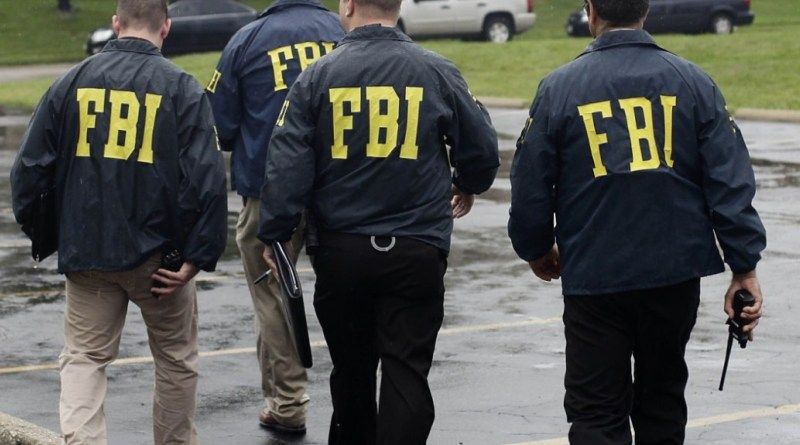
Among the most widely discussed revelations in the released files was confirmation of an early complaint in 1996 by Epstein survivor Maria Farmer to the FBI, alleging sexual abuse and the possession or distribution of illicit images involving minors. That complaint had long been referenced in secondary sources, but its appearance in government documents has renewed debate about why authorities did not act sooner or more decisively.
Some grand jury transcripts included descriptions of disturbing abuse, including testimony about minors being paid to perform sexual acts. The youngest described in the available records was just 14 at the time of the encounter.
Despite these elements, many two decades of investigations remain largely unilluminated. FBI interviews with victims and internal DOJ memos explaining prosecutorial decisions — particularly the controversial plea deal Epstein received in 2008 — were absent or redacted from the published batches. For advocates and historians alike, these omissions represent some of the most crucial gaps in the public record.
What This Means for the Public and Future Accountability
The partial release of Epstein files and the ensuing uproar reflects broader national tensions around government transparency, privacy rights for victims, and political polarization. While the law mandated disclosure, it also allowed for legal exemptions and redactions — creating a gray zone in which the spirit of transparency can be weighed against other policy concerns.
For many victims and survivors, the release brought both vindication and frustration: vindication in seeing certain long‑held claims acknowledged in government records; frustration in the continuing lack of comprehensiveness and context. Advocacy groups continue to press for more complete disclosures and accountability for the institutional failures that allowed Epstein’s abuses to persist for years.
In Washington, the battle over the Epstein files is not over. Committees in Congress are demanding further documentation, legal experts are weighing whether the DOJ’s release satisfies statutory requirements, and public interest in the case shows no signs of waning.
Ultimately, the Epstein files controversy may not be about any single photo, document, or name. Instead, it’s reshaping the national debate over how democracies balance transparency, political pressure, and the rights of survivors — and whether the public can ever have a full accounting of one of the darkest and most perplexing chapters in recent American legal history.