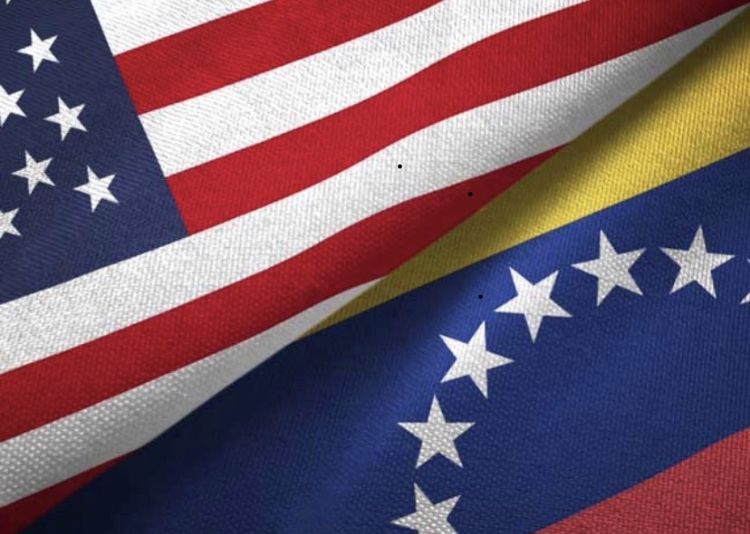
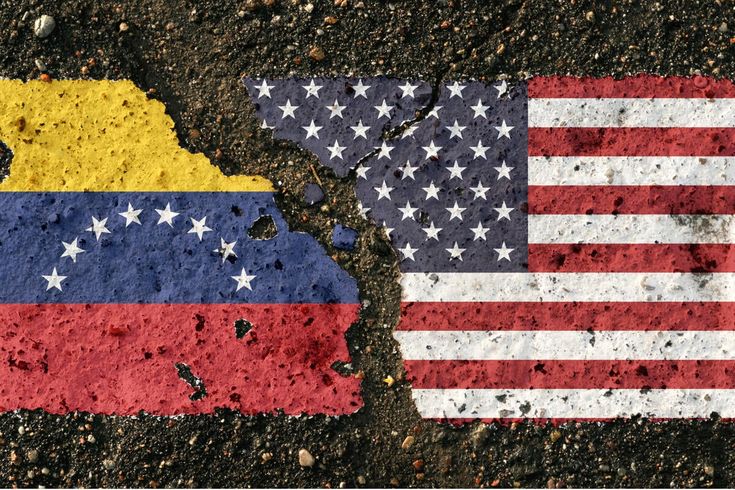
The relationship between the United States and Venezuela has reached a critical point as of December 2025, with tensions escalating under former President Donald Trump’s continued influence in American politics. Venezuela, long plagued by economic mismanagement, hyperinflation, and political instability, remains under the leadership of Nicolás Maduro, whose government has faced accusations of corruption, drug trafficking, and human rights abuses.
Naval Blockade and Military Posture
In mid-December 2025, Trump ordered a comprehensive naval blockade of all sanctioned oil tankers entering or leaving Venezuelan ports. This move was framed as an effort to prevent illicit activity and cut off revenue streams for Maduro’s government. The blockade followed the U.S. seizure of a sanctioned Venezuelan oil tanker off the coast, marking one of the most significant escalations in U.S.-Venezuela relations in decades. Analysts have questioned the legality of these actions, suggesting they could constitute an act of war or unauthorized use of force under international law.
Alongside the blockade, the United States deployed a substantial military presence in the Caribbean, including warships, aircraft carriers, and thousands of personnel. U.S. forces have reportedly conducted strikes on vessels alleged to be involved in drug trafficking, resulting in casualties. Trump has publicly stated that he is not ruling out military conflict with Venezuela, keeping all options open as tensions rise.
Economic Sanctions Intensify
In addition to military measures, the Trump administration has expanded economic sanctions. On December 19, 2025, the U.S. Treasury imposed sanctions on seven individuals closely associated with Maduro, including family members and senior officials. The sanctions aim to cut off financial channels that allegedly fund corruption and drug trafficking, continuing a policy of isolating the Venezuelan government diplomatically and economically. Previous sanctions have targeted multiple oil tankers and shipping companies, as well as members of Maduro’s extended family, accused of using deceptive shipping practices to evade international restrictions.
Venezuela’s Response
Venezuela has strongly condemned these actions, labeling the blockade and sanctions as illegal and imperialistic. Maduro’s government has sought to escort oil vessels out of port in defiance of the U.S. blockade and has appealed to the United Nations Security Council to intervene against what it describes as U.S. aggression. The standoff has already affected global oil markets, as Venezuela holds the world’s largest proven oil reserves, and disruptions to exports have caused economic ripples worldwide.
Trump’s Approach to Foreign Policy
Trump’s approach toward Venezuela reflects a broader pattern in U.S. foreign policy under his influence: a willingness to use unilateral pressure, sanctions, and military threats to achieve political objectives, often with minimal reliance on multilateral diplomacy. While these measures have succeeded in isolating the Maduro government diplomatically, they have so far failed to remove Maduro from power or significantly improve conditions for Venezuelan citizens.
Fenamin and Controlled Substances
In addition to geopolitical developments, there has been public interest in substances like “Fenamin” or “Fenaminum” and their legal status. As of December 2025, no authoritative sources in the United States or internationally list a substance by that exact name as controlled or banned. Similar-sounding drugs, such as fenfluramine, have specific regulatory histories: once used as an appetite suppressant, fenfluramine is now prescription-only for certain medical conditions and is not classified as a controlled substance in the U.S. Other drugs with related chemical structures may have varying legal statuses depending on jurisdiction.
Controlled substances in the United States are regulated under the Controlled Substances Act, which classifies drugs into Schedules I through V based on their potential for abuse and medical use. Many illicit drugs, including heroin, fentanyl, and MDMA, fall into Schedule I or II, while prescription medications are scheduled based on accepted medical use and risk. In sports, the World Anti-Doping Agency publishes a Prohibited List, which is updated annually to restrict the use of performance-enhancing substances. Determining the status of any specific compound requires consulting official sources or chemical-specific references, as regional or national laws may differ.
Conclusion
In conclusion, the United States’ policy toward Venezuela in December 2025 is characterized by heightened confrontation, economic pressure, and a significant military presence, reflecting a hardline approach that has yet to achieve a decisive political outcome. Meanwhile, public attention to drug regulation underscores the complexity of identifying controlled substances, particularly when names are ambiguous or regionally variable. Both issues highlight the ongoing challenges the United States faces in foreign policy and domestic regulation, as well as the interplay between international diplomacy, law enforcement, and public awareness.