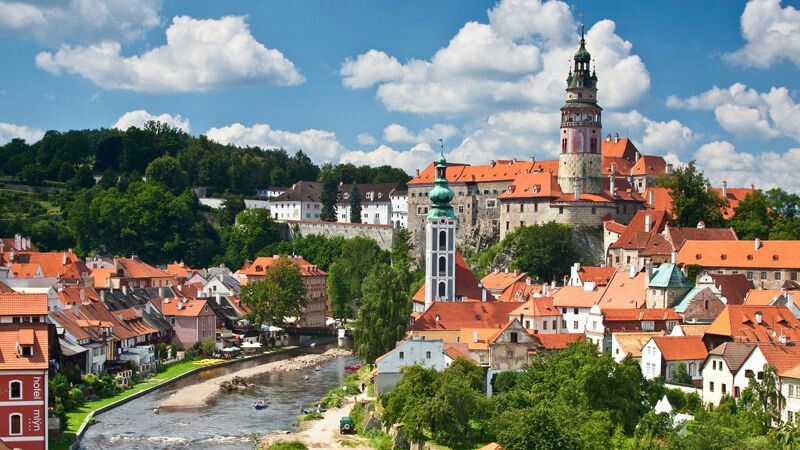
1. Český Krumlov, Czechia:
Fairytale Gothic in the Embrace of the Vltava River Although Český Krumlov is not a complete secret, compared to Prague it offers a much more intimate atmosphere—especially early in the morning or after sunset when the daytime trippers have left. The town, featuring an imposing castle complex and terraced gardens, stretches across a picturesque meander of the Vltava River. Winding cobblestone streets, Gothic and Renaissance houses, and mysterious nooks breathe history into every single step. What to see: Explore the extensive castle complex with its unique baroque theater and climb the castle tower for a breathtaking panoramic view of the town's red rooftops. Don't miss a stroll around the Egon Schiele Art Centrum.Local food tip: Head into a traditional tavern to enjoy a hearty Czech garlic soup served in a bread bowl, followed by roasted pork ribs with horseradish and mustard.
2. Bled, Slovenia:
An Alpine Paradise with a Mystical Island Slovenia’s Lake Bled, with its turquoise-blue water, a dramatic medieval castle perched on a cliff, and an iconic pilgrimage church sitting on a tiny island in the middle, looks like it was plucked straight from a Grimm brothers’ fairytale. While it is gaining well-deserved attention, it still retains an incredible sense of serenity—especially if you venture onto the hiking trails leading into the surrounding forests of Triglav National Park. What to see: Rent a traditional wooden boat called a "pletna" and let a oarsman row you across to the island, where you can ring the wishing bell inside the Church of Maria Assumption. Afterward, hike up to Bled Castle for the most stunning view over the entire lake.Local food tip: Treat yourself to the famous Bled cream cake (kremšnita)—a light, flaky pastry layered with delicate vanilla custard and whipped cream that literally melts in your mouth.
3. Sintra, Portugal:
Romantic Mist and Royal Palaces Just a short trip from sunny Lisbon, tucked away in the cooler, forested hills of the Sintra Mountains, lies a place that feels completely otherworldly. Sintra is famous for its vibrant, colorful palaces, aristocratic estates, and a mystical atmosphere often enhanced by rolling morning Atlantic mists. What to see: Explore the brilliantly colorful Pena Palace, which blends Moorish and Manueline architectural styles, and make sure to visit the ancient Moorish Castle with its stone ramparts winding across the mountain ridges. A uniquely magical experience awaits you at Quinta da Regaleira and its famous Initiation Well.Local food tip: Try a traditional Portuguese pastry called Travesseiro de Sintra—a flaky, pillow-shaped puff pastry filled with a luscious almond and egg cream, best enjoyed alongside a strong morning coffee.
4. Gjirokastër, Albania:
The City of a Thousand Steps and Stone Roofs Albania is enjoying a well-earned tourism boom, but the southern part of the country and particularly the town of Gjirokastër still remain delightfully off the beaten path. Designated as a UNESCO World Heritage site, Gjirokastër is renowned for its distinct Ottoman architecture. Houses featuring characteristic gray stone roofs cascade down the hillside, and the old-town alleys form a labyrinth of culture and history. What to see: The town’s dominant feature is the massive Gjirokastër Fortress, which houses a military museum and offers sweeping views over the Drino River valley. Also, make time to tour historic Ottoman mansion-museums like Zekate House or Skëenduli House to catch a glimpse of aristocratic 19th-century life.Local food tip: Taste qifqi—traditional local rice balls seasoned with mint, eggs, and spices, fried to a golden crisp.
5. Ronda, Spain:
Dramatic Cliffs in the Heart of Andalusia Ronda in southern Spain’s Andalusia region is a town that will literally take your breath away. Split in half by the deep, plunging El Tajo gorge carved by the Guadalevín River, the town is dramatically connected by the magnificent 18th-century Puente Nuevo bridge. The entire city radiates traditional Andalusian charm, rooted deeply in the history of bullfighting and flamenco. What to see: Take a walk across the soaring arches of Puente Nuevo, visit Plaza de Toros, one of Spain’s oldest and most historic bullrings, and wander aimlessly through the quiet, whitewashed alleys of the old Moorish quarter, La Ciudad.Local food tip: Indulge in classic Andalusian tapas, such as rabo de toro (a rich, slow-cooked braised oxtail stew) accompanied by a glass of robust local red wine.
6. Castelluccio di Norcia, Italy:
The Blooming Plateau of Umbria Tucked away in the heart of the Apennine Mountains in Italy’s Umbria region, the small mountain village of Castelluccio di Norcia offers one of the most stunning natural spectacles in the country. Although hit hard by past earthquakes, its surrounding landscape on the vast Pian Grande plateau remains an unforgettable experience—especially in late spring and early summer when the entire basin bursts into a sea of wild wildflowers. What to see: Hike or bike across the sprawling Pian Grande plateau during the peak blooming season (known as La Fioritura) in June, when the landscape transforms into an impressionist painting of reds, yellows, and blues.Local food tip: Taste the world-famous Castelluccio lentils (lenticchia di Castelluccio), grown in the nutrient-rich volcanic mountain soil and celebrated for their delicate flavor and thin skins.
7. Dinant, Belgium:
A Picturesque Sanctuary Beneath the Cliffs Picturesque Belgian town Dinant clings tightly to the narrow banks of the Meuse River, squeezed dramatically between the water and a sheer, imposing rock face. Birthplace of Adolphe Sax, the inventor of the saxophone, Dinant’s skyline is defined by the striking Collegiate Church of Notre-Dame and a formidable citadel perched high above. What to see: Climb the 408 steps up to the Citadel of Dinant or take the cable car for a sweeping view over the river valley. Visit the museum dedicated to Adolphe Sax and cross the bridge lined with vibrant, colorful artistic saxophones.Local food tip: Try Flamiche—a rich, savory tart made with local fatty cheese (boulette de Romedenne), butter, and eggs, baked until golden and best paired with a cold Belgian abbey beer.