It’s 6:00 PM. You officially shut your laptop, push back from your desk, and declare your workday over. But let's be honest: are you really done?
You might be physically sitting at the dinner table, but mentally, you’re still drafting that urgent email. You’re standing in the shower, but your brain is aggressively preparing for tomorrow morning's status meeting. Because your brain refuses to log off, you end up engaging in "Revenge Bedtime Procrastination"—mindlessly scrolling through TikTok or Instagram until 2:00 AM, desperately sacrificing sleep just to feel like you clawed back a few hours of personal time.
Here is the reality: You might not be at the office anymore, but your nervous system is still locked in full "fight or flight" survival mode.
The Truth: Bubble Baths Won't Save You
If you look up how to relax after a stressful workday, the internet will give you a list of exhausting "self-care" chores. They will tell you to light an expensive candle, do a 45-minute guided meditation, draw a bubble bath, and write in a gratitude journal.Let's call a truce on this right now. You are an exhausted, high-performing professional. The absolute last thing you need right now is to turn your relaxation into another massive to-do list.
You don't need a complicated, spiritual wellness routine to shut off your brain. You need a hard, non-negotiable, 15-minute cognitive boundary.
The Protocol: The 3-Step Evening Shutdown
To stop the endless loop of work anxiety, you have to actively signal to your brain that the workday is dead and buried. Here is the exact, three-step executive shutdown routine to reclaim your evening.Step 1: The Brain Dump (Close the Open Loops) Your brain is keeping you awake because it is terrified you will forget what needs to be done. You have to close those "open loops." Take a physical pen and a piece of paper, and write down your top 3 non-negotiable tasks for tomorrow. That’s it. By putting it on paper, you are sending a neurological signal to your brain: "I have acknowledged this. It is safe on this paper. We will handle it tomorrow. You can power down now."
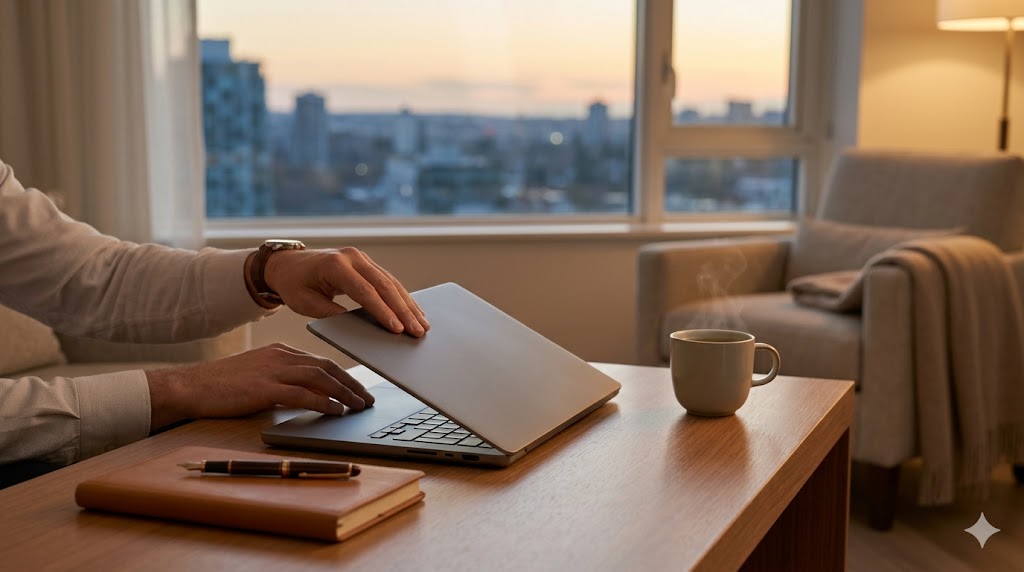
Step 2: The Physical Boundary (Hide the Evidence) Leaving your work laptop on the kitchen island or your work phone on the coffee table is a massive mistake. Every time your eyes scan past those devices, your brain gets a microscopic spike of cortisol. You need a strict physical boundary. When the workday is done, shut the laptop, put it in your bag, and physically place it in a drawer, a closet, or another room. Out of sight entirely equals out of your nervous system's stress radius.
Step 3: The Sensory Shift (Change Your State) You cannot transition from "corporate warrior" to "relaxed human" without a physical trigger. Give your body a tangible, sensory cue that the shift is over. Take off your work clothes or your "work-from-home" outfit and immediately change into comfortable loungewear. Go to the bathroom and physically wash your face with cold water to shock your system out of its midday slump. Brew a specific, caffeine-free herbal tea that you only drink at night. Change your environment, change your state.
When you execute this 15-minute shutdown, you aren't just walking away from your desk—you are firmly taking your life back from your job. Shut it down, protect your peace, and finally get the rest you've earned.